
It breaks down clayey soil and improves its structure, allowing water and nutrients to reach plant roots more easily.
Humic acid lowers soil acidity and increases the cation exchange capacity (CEC) of sandy soil particles.
It promotes root growth, minimizes the impact of soil salinity by releasing ions, and lowers the osmotic pressure of salt on plant roots.
Seeds treated with humic acids had higher germination rates and cellular efficiency.
Chemical Composition :
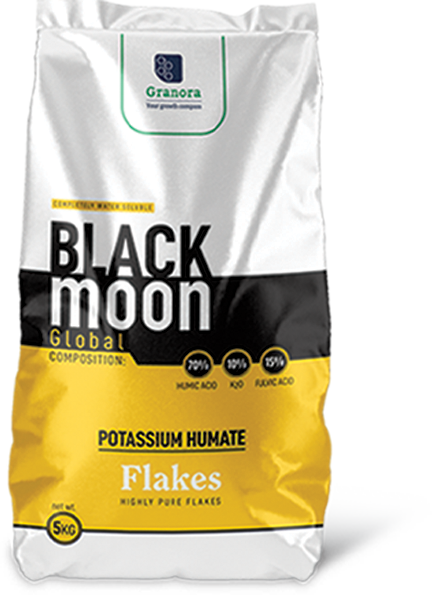
| Humic acid | 70% |
| Fulvic Acid | 15% |
| Potassium | 10% |
The properties of the compound:
Benefits of Using Humic Acid in Soil:
It breaks down clayey soil and improves its structure, making it easier for water and fertilizer to reach the plant roots.
Humic acid balances soil acidity and improves Cation Exchange Capacity (CEC) between particles in sandy soil.
It promotes root growth and reduces soil salinity by releasing ions and lowering osmotic pressure on plant roots.
Humic acid treatment improves seed germination and cellular activity.
Rates of use:
| The Yield | Dosage (kg/acre/day) | Stage of Use |
|---|---|---|
| Field and vegetable crops: | 4:2 kg per acre | Divided into consecutive sprays during the season. |
| Fruit trees: | 6:5 kg per acre | During the agricultural season. |
| Bananas: | 10 kg per acre | Initially 2 kg, then 1 kg every 21 days. |
| Greenhouses and protected cultivation: | 3:2 kg | During the season, divided into 200 g per unit in each application, repeated every 10 days. |
Here you can write the product description.